

Neurosurgical Microscope: Equipping Brain Surgery with a “Precision Eye”
Recently, the neurosurgery team at Jinta County General Hospital successfully performed a high-difficulty hematoma evacuation surgery on a patient with intracranial hematoma using a novel neurosurgical operating microscope. Under the high-definition magnification of dozens of times, the surgeons were able to clearly distinguish the pathological tissues from critical neurovascular structures, completing the procedure in approximately 4 hours. This case exemplifies the indispensable role of neurosurgical microscopes in modern neurosurgery, which are gradually expanding from large medical centers to broader clinical applications, continuously advancing surgical practices toward greater precision and minimally invasive outcomes.
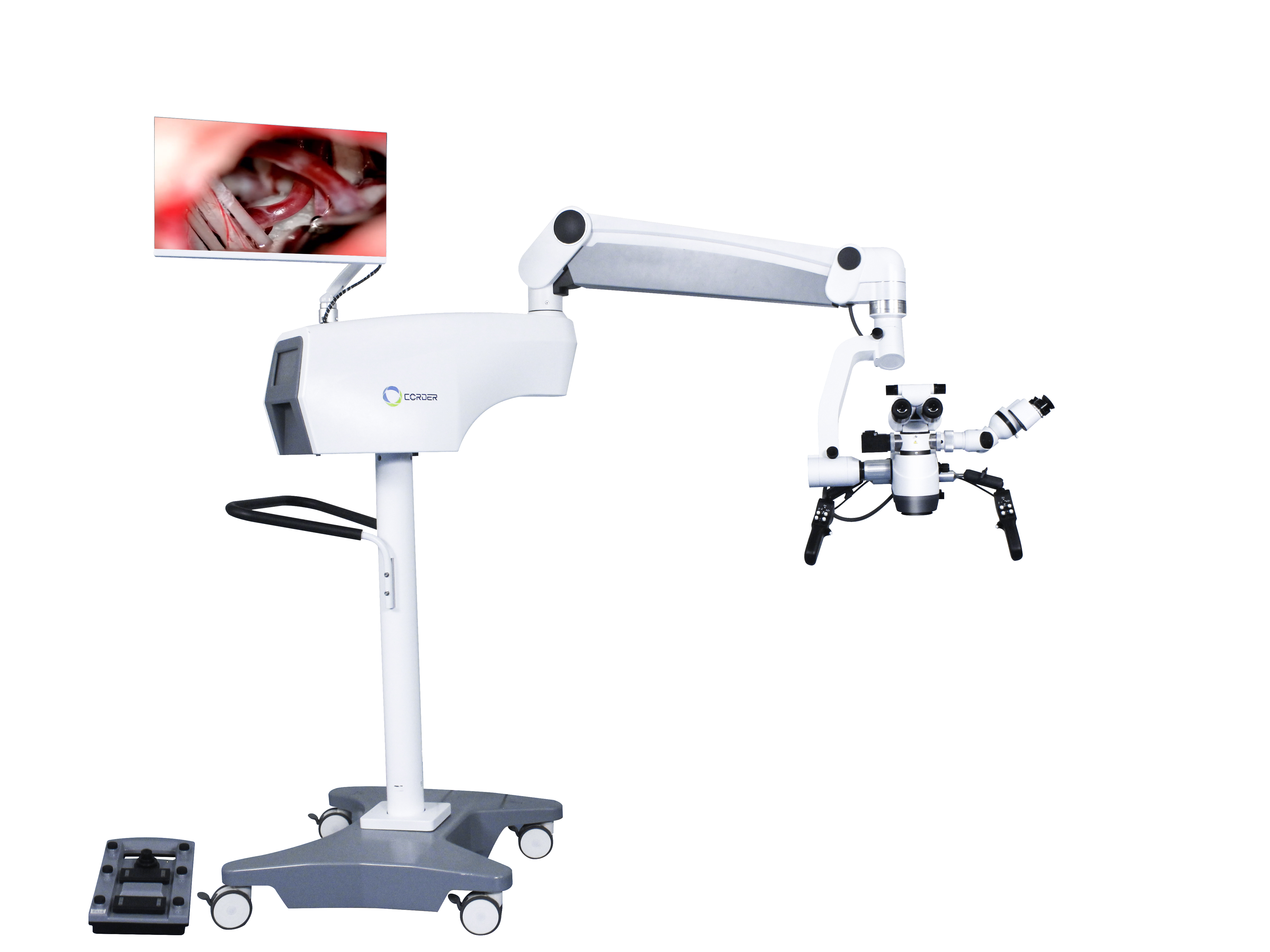
In the precision field of neurosurgery, often referred to as "operating at the human command center," the surgical microscope has become a critical device determining the success or failure of procedures. It has fundamentally transformed the "combat mode" of surgeons. Traditional neurosurgical operations face challenges such as limited visual fields and extremely high demands for precision, whereas the high-definition imaging system of microscopes provides surgeons with a clarity and three-dimensional depth far surpassing that of the naked eye. For instance, the 3D fluorescence surgical microscope used at Shaanxi Provincial People's Hospital not only offers clearer images but also features an ergonomic design that allows surgeons to perform prolonged, meticulous operations in a more comfortable and stable posture, significantly enhancing team collaboration and surgical efficiency.
More notably, intelligent surgical microscopes integrating multiple cutting-edge technologies are elevating surgical safety and efficacy to unprecedented levels. At the Army Medical University's Army Characteristic Medical Center, a surgical microscope system named ASOM-640 has been put into operation. This system incorporates a multimodal fluorescence imaging platform, enabling not only micron-level precision positioning but also real-time visualization of vascular blood flow and tissue metabolism during surgery. It provides unparalleled assurance for high-risk procedures such as aneurysm clipping and brainstem tumor resection.
The value of these advanced devices is benefiting more patients through two pathways. On one hand, in top-tier hospitals, they serve as powerful tools for performing ultra-high-difficulty surgeries. For instance, the Department of Neurosurgery at Aviation General Hospital, a regional key specialty in Beijing, is equipped with 9 Neurosurgery microscopes, enabling it to complete a large number of complex surgeries annually. On the other hand, through the model of "expert resource deployment + equipment support," high-level surgical microscopy technology has also been introduced to primary hospitals. In Shantou, Guangdong, Overseas Chinese Hospital has equipped key devices such as ASOM surgical microscopes and recruited provincial-level experts, allowing neurosurgical oncology patients who previously had to travel to major cities to now receive surgical treatment "right at their doorstep," significantly reducing economic and travel burdens.
Looking ahead, the development of neurosurgical microscopes exhibits a clear trend toward intelligence and precision. Currently, the surgical microscope market has long been dominated by international brands, but domestic equipment has established a foothold in the mid-to-low-end market and is beginning to break into the high-end segment. Meanwhile, microscope technology itself is deeply integrating with other cutting-edge technologies. For instance, institutions such as the Affiliated Hospital of Xuzhou Medical University have adopted a handheld cellular microscope (EndoSCell™) for brain tumor surgery. This device can magnify tissues in real-time by 1280 times, enabling surgeons to directly observe cellular-level images during surgery, thereby achieving precise tumor boundary determination. It is hailed as the "cellular eye" of surgeons.
From the foundational magnification for illuminating the intricate surgical field to intelligent surgical platforms enhanced by augmented reality and cellular-level imaging, the evolution of neurosurgical microscopes continues to expand the boundaries of surgeons' capabilities. It not only improves the efficiency and outcomes of surgeries but also fundamentally transforms the treatment prospects for numerous patients with neurological disorders, establishing itself as an indispensable cornerstone in the modern neurosurgical medical system.
Post time: Dec-29-2025


