

Dental surgical microscope: The “microscopic revolution” in stomatology is quietly taking place
Recently, a remarkable dental procedure was performed at a renowned dental hospital in Beijing. The patient was a young woman from another region who had been diagnosed with a complex apical cyst. Despite seeking treatment at multiple institutions, she was consistently informed that tooth extraction was the only viable option. However, at the hospital's microsurgical center, a team of specialists utilized a high-precision dental surgical microscope to perform a minimally invasive procedure in the apical region under a clear field of view magnified by dozens of times. The surgery not only completely removed the lesion but also successfully preserved the tooth that was otherwise destined for extraction. This procedure epitomizes a profound transformation in the field of oral medicine—the widespread application of dental microscopes is ushering oral treatment into a new "microscopic era."
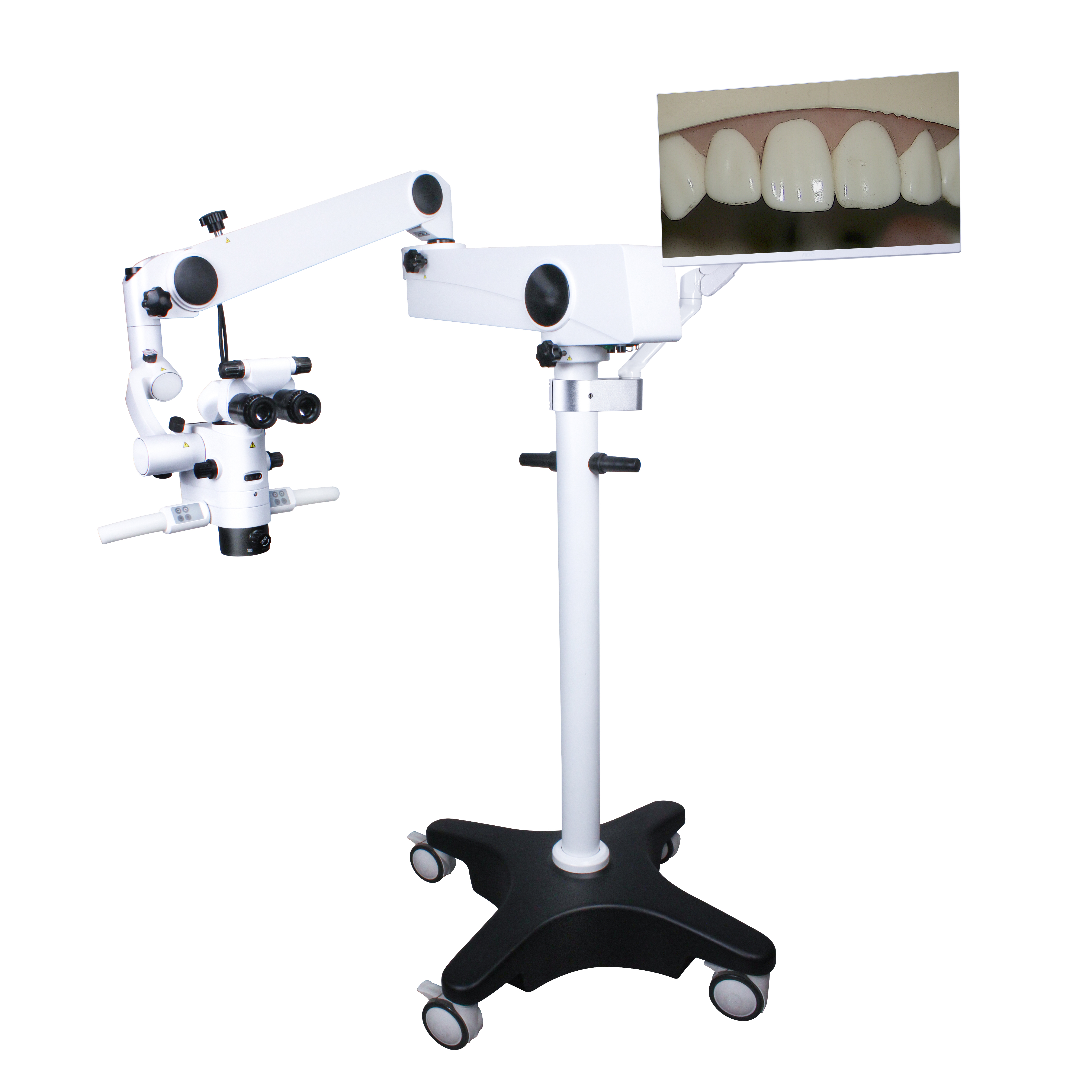
In the past, dentists primarily relied on visual observation and manual dexterity for surgical procedures, akin to navigating through a fog. The introduction of dental Operating microscopes has illuminated a beacon for clinicians, providing a stable, bright, and magnification-adjustable field of view. This enables clear visualization of hidden collateral root canals, minute root fractures, residual foreign bodies, and even the most intricate anatomical structures at the root apex. Hospital reports from locations such as Quzhou, Zhejiang, and Qinhuangdao, Hebei, demonstrate that many previously considered 'incurable' cases—such as root canal calcification and instrument fractures—have been successfully resolved under microscopic guidance, significantly improving treatment success rates. A senior endodontist described it thus: 'The microscope has allowed us to truly' see 'the microscopic world within teeth for the first time, transforming surgery from an experience-dependent process into a scientifically precise and visually controlled procedure.'
The direct benefit of this "visualization" is the precision and minimally invasive nature of the treatment. Under microscopic guidance, physicians can perform submillimeter-level fine manipulations with the precision of skilled craftsmen, maximizing the preservation of healthy dental tissues. This not only enhances long-term therapeutic outcomes but also significantly reduces postoperative discomfort and healing time for patients. Additionally, the ergonomic design allows physicians to maintain a comfortable sitting posture, eliminating the risk of occupational strain caused by prolonged bending. More notably, the integrated camera system of the microscope serves as a bridge for physician-patient communication, enabling patients to visualize the true internal condition of their teeth in real time, thereby making the treatment process transparent and credible.
Despite the substantial cost of high-end dental surgical microscopes, the significant leap in medical quality they deliver is driving their rapid adoption from large hospitals in first-tier cities to nationwide implementation. In multiple municipal hospitals across Henan, Anhui, Guizhou, and other regions, the introduction of microscopes has become a hallmark initiative to enhance specialized technical capabilities. Market analysis data indicate that this market is maintaining steady growth, signaling its transition from "high-end optional equipment" to "standard professional equipment."
Looking ahead, the connotation of this "microscopic revolution" continues to expand. Cutting-edge exploration is no longer limited to simple magnification and illumination. In research-oriented hospitals such as those in Shanghai and Dalian, dental surgical microscopes are being integrated with digital guides, CBCT imaging real-time navigation, and even robot-assisted systems, forming more intelligent integrated diagnostic and therapeutic platforms. Experts predict that the future convergence of "microscopes + digitalization + artificial intelligence" will further enhance the predictability and safety of complex surgeries, and may even enable remote microscopic consultations, allowing high-quality medical resources to transcend geographical limitations.
From saving a single tooth to redefining professional standards, dental surgical microscopes epitomize the direction of modern medical advancement through their relentless pursuit of precision, efficiency, and predictability. This innovation transcends mere tool development; it signifies an upgrade in therapeutic philosophy. With the increasing prevalence and refinement of this technology, minimally invasive, precise, and comfortable treatment experiences will become a tangible reality accessible to the vast majority of dental patients.
Post time: Dec-26-2025


